



People made better.
Patient-Led Implants

Ahn Jung-hyun, Chief Director

Hello, I am Ahn Jung-hyun, Chief Director.

To me, patient-led implants do not simply mean doing whatever the patient wants. In the past, care was dentist-led: the dentist set the treatment plan and the patient decided whether to follow it. At EROM Dental, the dentist explains the treatment plan and then revises it or offers alternatives according to the direction the patient wants, reflecting the patient's views as fully as possible. 

Asking the patient to decide everything is, I think, like running a train where there are no tracks. The patient-led implant I have in mind is one where I present various kinds of tracks, clearly explain the results and the characteristics of the process for each track, and then let the patient choose the track. In this way, treatment can fully reflect the patient's wishes, and because the decision is the patient's own, the implant process can feel less uncomfortable and more satisfying.

We recommend the implant that suits your situation. 

At EROM Dental, we recommend implants suited to your situation, considering bone condition and the location of nerves and blood vessels,
We explain to help you make your choice.
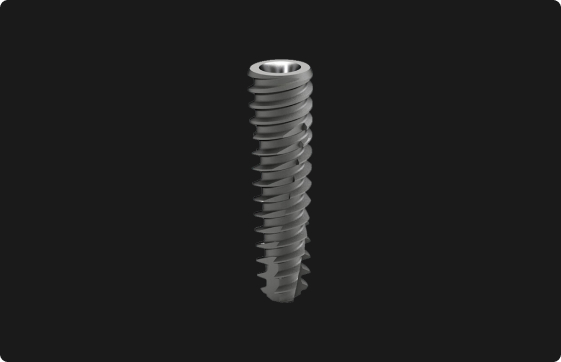
Dentis SQ implant

It helps prevent bone resorption and offers improved self-tapping, a design that supports initial stability. It also covers a wide range of clinical indications.
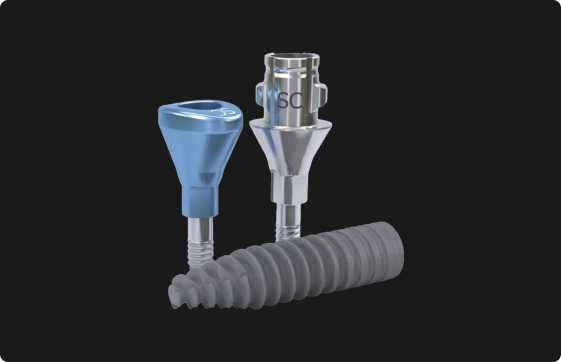
Straumann BLT Roxolid SLActive

Straumann Bone Level Tapered (BLT) Roxolid SLActive
is a product used where the bone width is thin;
the extent of bone grafting depends on the examination.
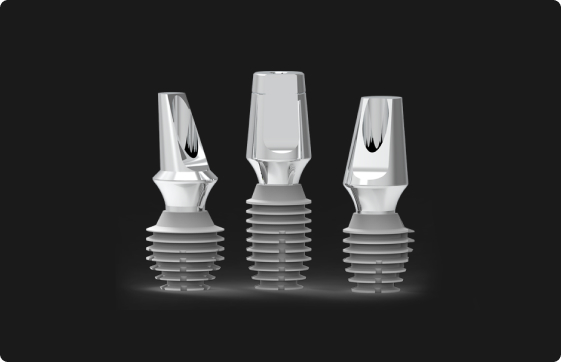
WITHWELL

Its special HA surface treatment supports bone formation, and it can be used where bone depth is shallow.
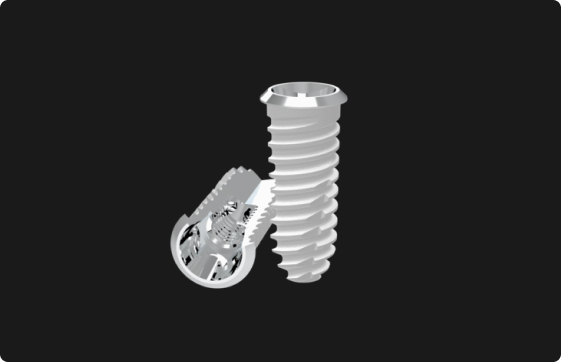
safe 3.5

It is a product designed for use where the bone width is narrow.

Our Commitment to Implants

01

An experienced Chief Director

02

Real-Time Prosthesis Production Updates

03

Low-Dose 3D CT

04

Primescan—no conventional impressions

05

Our Implant Warranty

Implants at a Glance

How many implants has EROM Dental placed?

From November 2021 to August 6, 2026, we placed 1,306 implants. We use fixtures from three manufacturers—Dentis, MegaGen and Straumann—with a 5-year warranty on the fixture and a 2-year warranty on the abutment and crown.

1,306 casesImplant Placement
(2021.11~2026.8.6)
3 manufacturersFixtures Used
(Dentis · MegaGen · Straumann)
5 yearsFixture Warranty
2 yearsAbutment · Crown Warranty

These figures are counts from clinic treatment records, and the numbers do not indicate the outcome of any individual treatment. The warranty requires a check-up every 6 months; damage from accidents or other external causes is repaired at cost, and osseointegration failure caused by smoking is excluded.

FAQ

Questions patients often ask before visiting

What kind of treatment is an implant?

A treatment that places an artificial tooth root (fixture) where a tooth has been lost or extracted and attaches a prosthesis on top to restore chewing function. EROM Dental Clinic provides implants through patient-led care, in which you choose treatment that fits your values based on sufficient information.

Which fixtures (materials) do you use for implants?

We use fixtures from three manufacturers—Dentis SQ·AXEL, MegaGen BD and Straumann BLT·BLX—with MegaGen BD and Straumann BLT as our main systems.

How much do implants cost?

The fee varies by dentist and fixture type. It starts from KRW 1,090,000 with Dentis SQ·AXEL, and the exact amount for each fixture is explained in consultation.

Is there a warranty period for implants?

The fixture is warranted for 5 years and the abutment and crown for 2 years. A check-up every 6 months is required, and damage caused by the patient or osseointegration failure caused by smoking is excluded.

Are implants very painful?

The implant itself (bone) is not a pain-sensitive tissue. Pain mostly comes from irritation of the periosteum when the gum is incised and lifted from the bone. With immediate placement after extraction, which involves less incision and flap elevation, swelling and pain tend to be relatively milder.

How should I care for my implant so it lasts?

A check-up every 6 months after placement is both a warranty condition and the basis of good care. Smoking can lead to osseointegration failure, so it is best avoided.

Do I really need a bone graft?

If there is enough bone, it is not needed. A molar implant usually uses a 5 mm diameter fixture with at least 1.5 mm of alveolar bone on each side, so about 8 mm of bone width is needed. If there is less bone, we graft; if there is enough, we do not.

Is immediate implant placement possible for everyone?

No. Because the implant is placed directly into the extraction site, we do not recommend it when large gaps in the bone make initial stability hard to achieve, when periodontitis has caused severe bone loss, when structures that must not be touched—such as the nerve canal or maxillary sinus—are close by, or when oral hygiene is difficult to maintain.

When is All on X (full-arch implants) done?

It is done for people with few remaining teeth, and compared with placing many implants it involves a smaller surgical area and less bone grafting, which is often advantageous for older patients or those with systemic conditions. However, we do not recommend it if your general health is poor due to heavy smoking or drinking or severe diabetes.

Do you have a lot of experience placing implants?

From November 2021 to August 2026, we placed 1,306 implants, as counted in DentWeb.

Do you also make implant prostheses in your in-house lab?

Yes. Prostheses are made in our in-house dental lab, and the Chief Director personally checks and adjusts the design.

What is the most common question in implant consultations?

The three questions we hear most are “Does it hurt?”, “Will it last a lifetime?” and “Do I have to do it now?” At consultation, we answer each with specific evidence.

Are implants covered by insurance?

National Health Insurance subscribers aged 65 and over can receive insurance-covered implants under certain conditions. You can confirm eligibility and coverage details in an insurance implant consultation.

What tests are done before an implant?

We check the bone condition and the position of the nerve canal with a low-dose 3D CT scan, then plan the treatment.

I am leaving the country soon—can implants also be done in one day?

One-day treatment is one of our strengths, but implants require time for osseointegration, so they cannot be completed in a day. Patients about to leave the country mainly receive inlay and crown treatment, and implants are planned around their schedule.

What should I be careful about after implant placement?

Apply ice packs for 2–3 days right after surgery and take all prescribed medication. Do not swallow blood or saliva or blow your nose, and avoid putting pressure on the surgical site, drinking, smoking, strenuous exercise and saunas. After a bone graft you may feel a sandy sensation, and swelling and bruising resolve in about 3 weeks.

Always together.
EROM Community

We record and share the value of being together.