

People made better.
Immediate Implant Placement

What Is Immediate Implant Placement?

Conventional implant treatment is done about 2–3 months after the existing tooth is extracted,
but with immediate implant placement, at the same time as the tooth is extracted
the implant is placed; depending on your condition, it is a time-efficient
method. However, at the time of extraction, jawbone inflammation must not be severe and bone volume
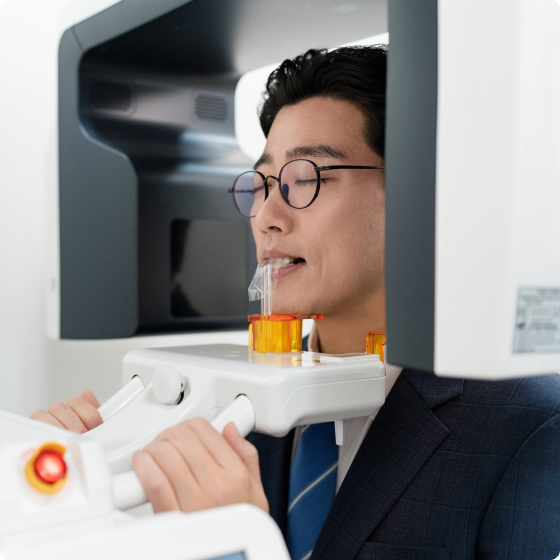
must be sufficient. Using 3D CT, your gum condition
After careful review, if gum disease is not severe
the procedure can be carried out with care.

Immediate Implant Placement
When Needed

  • When prosthetic treatment is needed at the same time as surgery, such as for front teeth
  • When you cannot chew with your current teeth and eating normally is difficult
  • When multiple procedures and anesthesia are a mental or time burden
  • When the gums are weak and expected to recede during treatment

Advantages of Immediate Implant Placement

Immediate Implant Placement
Treatment Process
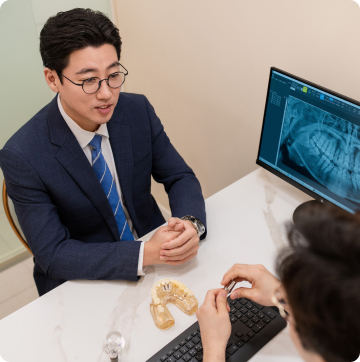
Diagnosis and Planning

Extraction and Implant Placement

Impression Taking

Prosthesis Fitting

Maintenance and Regular Check-ups

FAQ

Immediate Implant Placement: Common Questions

What is immediate implant placement?

A method of placing an implant directly into the socket right after a tooth is extracted. With less incision and flap elevation, there is often less swelling and pain than with conventional implants.

How is immediate placement different from a conventional implant?

With conventional implants, the implant is placed after waiting for the bone to heal after extraction, whereas immediate placement is done at the same time as extraction. With less incision and flap elevation, there is less damage to the periosteum, so pain and swelling are relatively milder.

Is immediate placement less painful?

Pain arises when the periosteum is irritated as the gum is lifted from the bone; immediate placement after extraction is usually done without incision or flap elevation, so swelling and pain tend to be less.

Are there cases where immediate placement is difficult?

Yes. We do not recommend it when there are large gaps in the bone that make initial stability hard to achieve, when severe periodontitis has caused major bone loss, when structures that must not be touched—such as the maxillary sinus or inferior alveolar nerve canal—are close by, or when oral hygiene is difficult to maintain.

Why is initial stability important?

After placement, an implant goes through osseointegration, in which its surface bonds with the alveolar bone, and it must not move during this period. With immediate placement, the gap left by extraction can make initial stability hard to achieve, so we check the bone in advance.

Does immediate placement also require a bone graft?

Teeth are often extracted because of periodontitis or fracture, so healthy bone is rare, and immediate placement actually often requires a bone graft as well.

Which fixtures are used for immediate implant placement?

We choose among Dentis SQ·AXEL, MegaGen BD and Straumann BLT·BLX according to your condition, with MegaGen BD and Straumann BLT as our main systems.

Is there a warranty on immediately placed implants?

As with our other implants, the fixture is warranted for 5 years and the abutment and crown for 2 years, with a check-up required every 6 months.

How much does immediate implant placement cost?

The fee varies by dentist and fixture type, starting from KRW 1,090,000 with Dentis SQ·AXEL. Any additional cost for immediate placement is explained at consultation.

If an implant is placed right after extraction, won't it be loose?

We proceed only when initial stability can be secured. If we check the bone in advance and judge that stability will be hard to achieve, we recommend placing the implant after the bone heals instead of immediate placement.

How do you check whether immediate placement is possible?

We check the bone condition at the extraction site and the position of the nerve canal and maxillary sinus with a low-dose 3D CT scan, then decide whether immediate placement is possible.

Can smokers not have immediate placement?

Immediate placement itself is still possible, but osseointegration failure caused by smoking is excluded from the implant warranty.

How long is recovery after immediate placement?

Apply ice packs for 2–3 days right after surgery; swelling and bruising usually resolve in about 3 weeks. Take all prescribed medication.

Why does EROM Dental prioritize immediate placement after extraction?

When immediate placement is possible, there is less incision and flap elevation and therefore less pain and swelling, so if initial stability can be achieved, we prioritize immediate placement.

Are prostheses for immediate implants also made in your in-house lab?

Yes. Prostheses are made in our in-house dental lab, and the Chief Director personally checks and adjusts the design.

How can I get a consultation for immediate placement?

We check your bone with a CT scan, then explain whether immediate placement is possible and the expected cost.

Always together.
EROM Community

We record and share the value of being together.