


People made better.
Implant with Bone Graft

What Is an Implant with Bone Graft?

With age, the jawbone gradually shrinks, and once a tooth has been extracted
after a long time, much of the jawbone is resorbed, making implant surgery
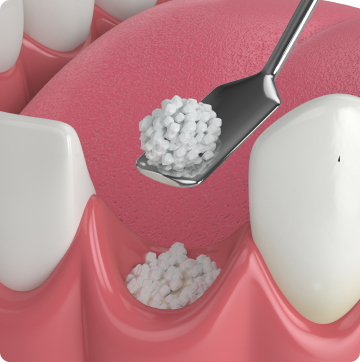
and makes it difficult; in such cases, bone graft material is used to increase the amount of jawbone
The method that allows the implant to settle in the jawbone is
an implant with bone graft. Autogenous, allogeneic, xenogeneic, synthetic bone and other
Using various bone graft materials suited to the situation, for a stable implant,
to build healthy jawbone.

Implant with Bone Graft
When Needed

  • When a lost tooth has been left untreated for a long time
  • When the jaw hurts while chewing food
  • When the jawbone is too thin or too low
  • When teeth have been lost to periodontal disease
  • When an implant must be placed right after a tooth is extracted

Advantages of Implants with Bone Graft

Bone Graft Process

Checking the alveolar bone after bone grafting
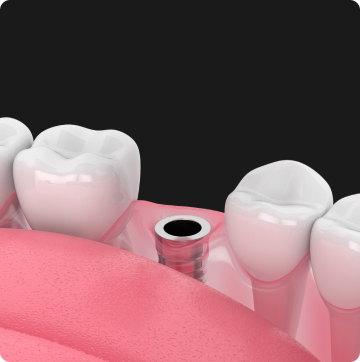
Checking and Placement

between the grafted bone and the implant
Promoting Integration

Once the implant is firmly
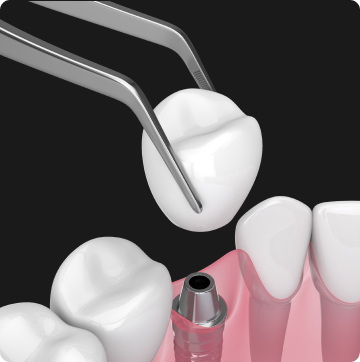
Attaching the prosthesis after it settles

Bone Graft Criteria at a Glance

What numbers are used to judge whether a bone graft is needed?

With Korean-made implants, a 5 mm diameter implant is usually placed for molars, and ideally there should be at least 1.5 mm of jawbone (alveolar bone) around the implant. That means about 8 mm of bone width is needed; if there is less, a bone graft is done.

5mmMolar Implant Diameter
(based on Korean-made implants)
1.5mmAround the Implant
Minimum Jawbone Thickness
8mmRequired Bone Width
(bone graft if insufficient)

These are the Chief Director's diagnostic criteria; whether a bone graft is actually needed is decided from CT and other test results.

FAQ

Implant with Bone Graft: Common Questions

Why is a bone graft needed?

For an implant to be stably fixed, there must be enough alveolar bone around the fixture. When placing a 5 mm diameter fixture for a molar, at least 1.5 mm of alveolar bone is needed on each side, so the bone must be about 8 mm wide; if there is less, a bone graft is done.

Do all implants require a bone graft?

No. If the bone is thick enough to meet the 8 mm width standard, the implant can be placed without a bone graft.

Why is a bone graft so often needed?

Most people getting implants have had teeth extracted because of periodontitis or fracture, so very healthy bone is rare, and immediate placement after extraction more often requires a bone graft as well.

Is a bone graft very painful?

Pain increases with the extent of gum incision and flap elevation for the bone graft. The larger the flap, the more the periosteum is irritated, and the more swelling and pain there is.

Can a bone graft be done together with immediate placement?

Yes. When the bone graft is only at the extraction site, the periosteum is not greatly disturbed, so it can often be done together with immediate placement.

What does it feel like after a bone graft?

After a bone graft, you may feel something like grains of sand at the surgical site. This is one of the normal reactions we tell you about.

How long is recovery after a bone graft?

Apply ice packs for 2–3 days right after surgery and take all prescribed medication. Swelling and bruising usually resolve in about 3 weeks, and the larger the bone graft, the more care recovery needs.

What should I be careful about after a bone graft?

Avoid putting pressure on the surgical site, swallowing blood or saliva, blowing your nose, drinking, smoking, saunas and strenuous exercise. Contact the clinic if there is heavy bleeding or the anesthesia does not wear off.

Does smoking affect bone graft results?

Yes. Smoking affects osseointegration after a bone graft so much that osseointegration failure caused by smoking is excluded from the implant warranty.

Does a bone graft make the implant more expensive?

The base fee varies by dentist and fixture type (from KRW 1,090,000 with Dentis SQ·AXEL), and the cost when a bone graft is added is explained in consultation.

How do you determine whether a bone graft is needed?

We check the width and height of the bone with a low-dose 3D CT scan to decide whether a bone graft is needed.

Is there a warranty on implants with bone grafts?

Yes. As with our other implants, the fixture is warranted for 5 years and the abutment and crown for 2 years, with a check-up required every 6 months.

Which fixtures are used for implants with bone grafts?

We choose among Dentis SQ·AXEL, MegaGen BD and Straumann BLT·BLX according to your condition, with MegaGen BD and Straumann BLT as our main systems.

Are there cases where a bone graft and immediate placement cannot be done together?

Yes. We may not recommend immediate placement when large gaps in the bone make initial stability hard to achieve, when severe periodontitis has caused major bone loss, or when the nerve canal or maxillary sinus is close by.

Where is the prosthesis made after a bone graft?

Prostheses are made in our in-house dental lab, and the Chief Director personally checks and adjusts the design.

If a lot of bone grafting is needed, can All on X be considered?

When few teeth remain, All on X, which requires less bone grafting than placing several implants, can be advantageous for older patients or those with systemic conditions.

Always together.
EROM Community

We record and share the value of being together.